
Farmhouse stained concrete floors come in so many styles and looks, but choosing the right one can feel overwhelming.
This guide covers the best ideas for farmhouse stained concrete floors that fit your space and budget.
I have worked with many homeowners who were unsure where to start with stained concrete. The right style and finish can completely change how a room feels.
We will walk you through popular types, creative ideas, and real motivation to help you find the look that works best for your home.
The right floor is closer than you think. Let us get into it.
Why Farmhouse Stained Concrete Floors Are Popular

Farmhouse stained concrete floors blend rustic charm with lasting durability, making them a top choice for modern homes.
Farmhouse style has been growing in home design for years, and stained concrete floors fit right into this look.
The staining process gives concrete a rich, layered color that looks naturally aged, which matches the farmhouse feel perfectly. These floors are tough, easy to clean, and hold up well against heavy foot traffic and spills.
They also cost less than hardwood or tile, especially when a concrete subfloor is already in place. On top of that, they pair well with wood furniture, shiplap walls, and natural textiles.
All of these reasons together make stained concrete a go to flooring choice for farmhouse style homes.
Rustic Farmhouse Stained Concrete Floors Ideas
Rustic farmhouse stained concrete floors bring a warm, grounded look to any home with lasting style and easy care.
Warm Brown and Weathered Finishes

Warm brown stained concrete floors are a natural fit for farmhouse homes. The deep, earthy tones work well in living rooms, kitchens, and mudrooms.
The weathered finish gives the floor a lived in look that feels aged and honest. You can go light with a honey brown tone or deeper with a rich walnut shade. Both pair well with wood furniture and exposed beams.
Stained concrete also holds up well under heavy foot traffic. A simple mop and occasional resealing keep it looking good for years.
Faux Wood Concrete Floor Designs

Faux wood concrete floors give you the look of hardwood without the upkeep. Staining and scoring techniques mimic the grain and plank pattern of real wood.
The floor holds up well against moisture and wear, making it great for basements, laundry rooms, and covered porches. Colors range from pale ash to deep walnut, and scoring creates thin lines that replicate plank edges for a convincing wood effect.
Matte Rustic Concrete Styles
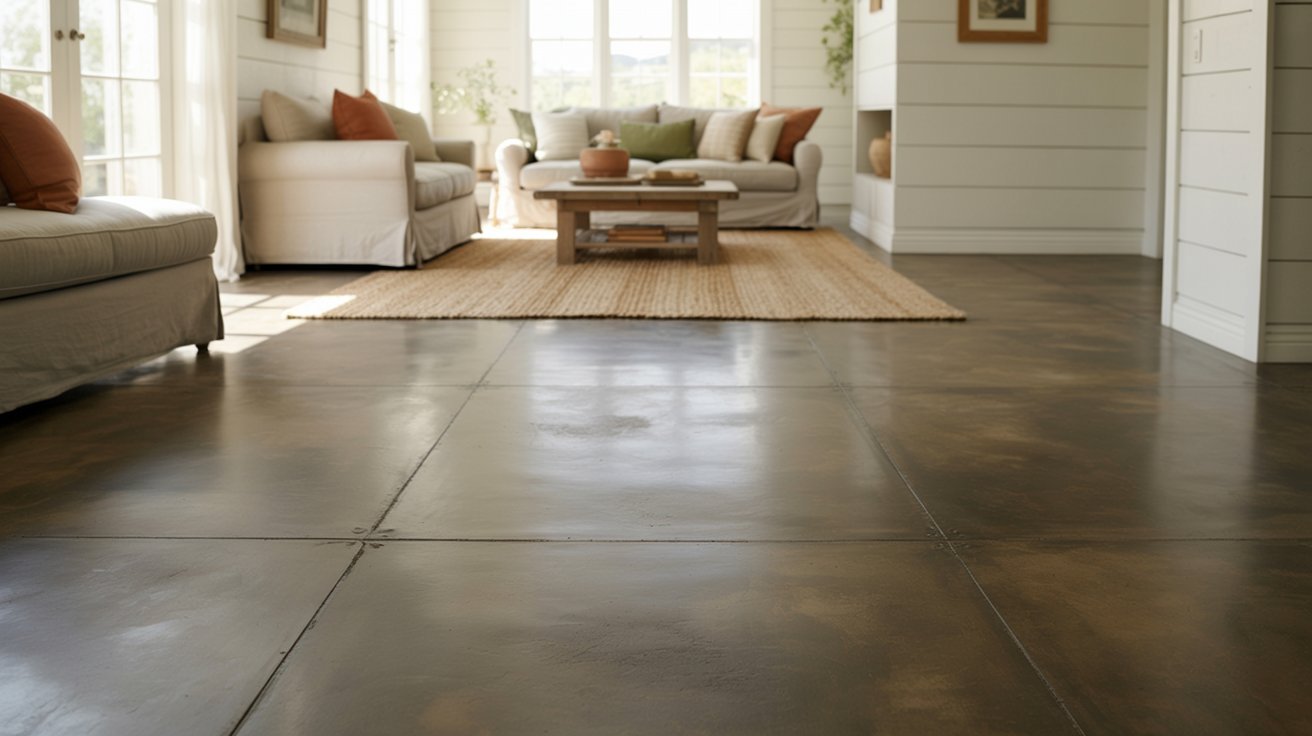
Matte concrete floors have a flat, earthy quality that feels simple and unpretentious. There is no shine or glare, just a quiet surface that lets the rest of the room stand out.
Slight color variations and natural imperfections give the floor character. Neutral tones like gray, taupe, and soft beige pair well with white shiplap walls and woven rugs.
Matte finishes also hide dust and minor scuffs better than glossy surfaces, making them a practical everyday choice.
Modern Farmhouse Stained Concrete Floors Ideas
Stained concrete floors add a warm, grounded feel to modern farmhouse homes with very little effort.
Neutral and Grey Concrete Floor Ideas

Neutral and grey tones are a go for farmhouse spaces. Soft grey pairs well with white walls, wood accents, and simple furniture.
Warm beige and sand shades add a bit more warmth without feeling busy. These tones stay flexible no matter how your space changes over time.
Polished Modern Farmhouse Floors

Polished concrete gives a clean, light reflecting finish that makes rooms feel more open. A mid level sheen works best for farmhouse interiors. It looks neat without feeling too formal.
Pair it with raw wood and simple textiles to keep the farmhouse character alive. It is also easy to maintain and holds up well under daily use.
Minimalist Farmhouse Styles

Minimalist farmhouse design focuses on clean lines, open space, and honest materials. Concrete floors fit right in. They stay in the background and let the rest of the room breathe.
Stick to pale grey, warm white, or soft taupe tones. Keep furniture low and functional. The floor does its job quietly, and that is exactly the point.
Acid Stain Farmhouse Stained Concrete Floors

Acid stained concrete floors bring rich, earthy tones to farmhouse spaces, giving every room a warm, lived in character.
Popular Acid Stain Colors
Acid stains react with concrete minerals to create natural looking tones. Earth tones like brown, tan, warm beige, terracotta, and slate gray are the most common picks for farmhouse spaces.
Green and blue tints give an aged, stone like finish. The color outcome depends on the concrete's age, mix, and moisture level.
Acid Wash Concrete Floor Looks
Acid wash floors have a mottled, marbled look that feels raw and lived in. A warm brown tone is the most common finish, reading like aged leather or worn wood.
Layering two or three stain colors adds more depth and richness. Gloss sealers bring out the color, while matte sealers keep things natural and low key.
Indoor and Outdoor Farmhouse Ideas
Indoors, acid stained concrete works well in kitchens, mudrooms, and living rooms. It handles spills and foot traffic without much upkeep. Outdoors, it suits covered porches, patios, and garden pathways, with earthy tones blending naturally into the landscape.
For exposed areas, use an exterior grade sealer and reapply every one to two years to keep the surface in good shape.
Best Farmhouse Stained Concrete Floors in House
Stained concrete floors are a practical and good looking choice for farmhouse homes. They last long, clean up fast, and suit almost any room.
Kitchen and Living Room Ideas
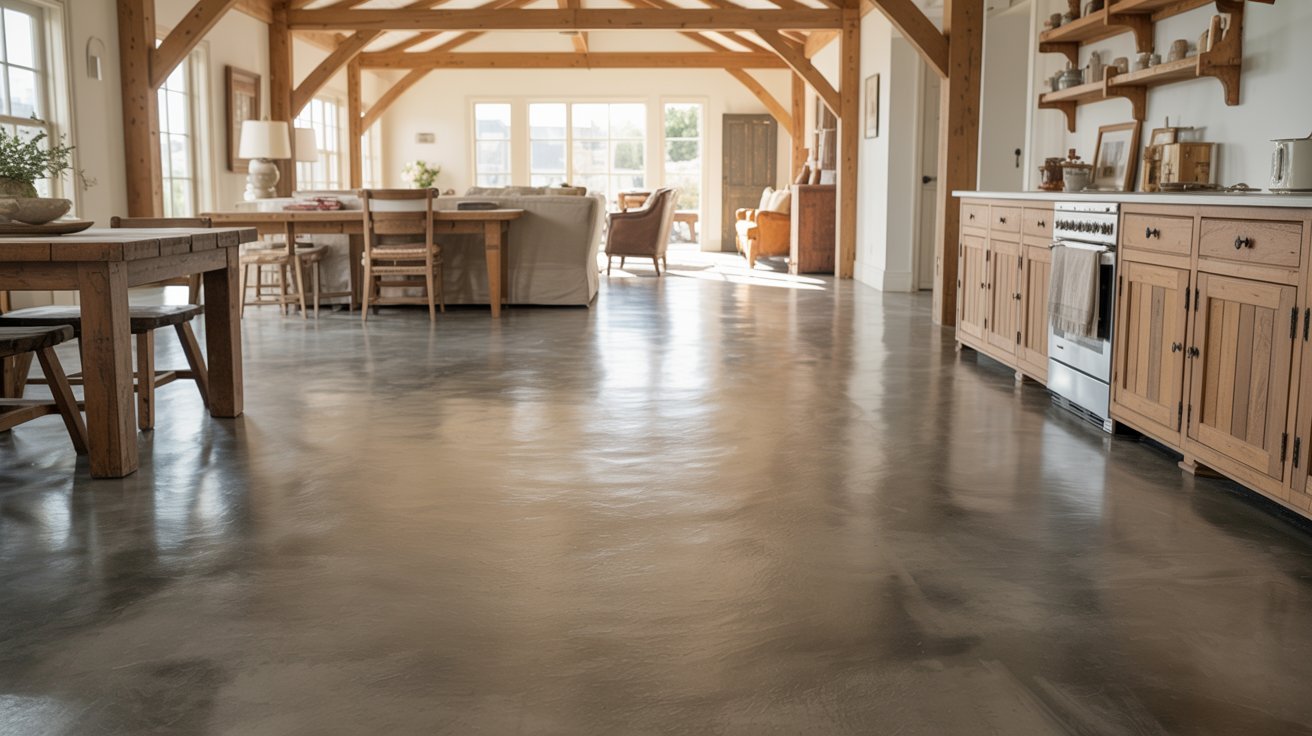
Stained concrete holds up well in kitchens against spills and daily mess. A warm brown or gray tone gives the space that classic farmhouse feel.
In the living room, a lighter stain keeps things open while a darker shade adds coziness. Using the same stain in both rooms makes the space feel connected and balanced.
Bathroom and Mudroom Concrete Floors

Sealed concrete floors handle moisture well and are easy to wipe down. Soft gray or warm beige tones pair nicely with white fixtures and wood accents.
In the mudroom, a dark stain is a smart pick. It hides dirt between cleanings and holds up to wet boots and heavy daily use.
Barndominium Farmhouse Floor Ideas

Stained concrete is a natural fit for barndominiums. It matches the raw, open feel of these homes and works well across large floor areas.
A hand troweled finish adds texture and warmth. Paired with wood beams and metal fixtures, it creates a grounded, welcoming space without a big price tag.
How to Choose the Best Farmhouse Concrete Floor

Picking the right concrete floor for a farmhouse comes down to color, finish, and style. Getting these three things right makes all the difference.
Choosing the Right Color and Finish
Light shades like soft gray or warm beige make a room feel open. Darker tones like charcoal add depth and a grounded feel.
For finish, matte works best in most farmhouse spaces. It hides scuffs and looks natural. A polished finish reflects more light but shows dust easily.
Always test a color sample in the room first. Lighting changes how concrete looks throughout the day.
Rustic vs Modern Farmhouse Styles
Rustic farmhouse floors lean into texture and warmth. Think earthy tones, rough finishes, and natural imperfections. These details add character, not flaws.
Modern farmhouse floors are smoother and cooler in tone. Clean gray or off white shades with a light seal give a neat, current look.
Choose based on what already exists in your home. Vintage and reclaimed pieces pair well with rustic concrete. Clean lined furniture fits better with a modern finish.
Easy Maintenance Tips for Farmhouse Concrete Floors
Concrete floors are tough and easy to care for with a few simple habits.
- Sweep daily and mop with a mild, pH neutral cleaner to keep the surface clean.
- Stay away from harsh chemicals as they wear down the floor over time.
- Reseal the floor every one to three years or when water stops beading on the surface.
- Clean up spills right away before they soak in and cause stains.
- Place rugs in high traffic areas, lift furniture instead of dragging it, and add felt pads under legs to avoid scratches.
Conclusion
Taking care of farmhouse concrete floors is simpler than most people think. I used to believe it required a lot of products and effort, but honestly, a quick sweep and timely spill cleanup make a huge difference.
Once you build these small habits, maintaining your floors feels effortless. Your floors can stay solid and good looking for years without spending much.
If these tips helped you, drop a comment below and let us know how you care for your farmhouse concrete floors. Share this post with someone who might find it useful!
Frequently Asked Questions
What is the best way to clean farmhouse concrete floors?
Sweep daily and mop with a mild, pH neutral cleaner. Avoid harsh chemicals as they can slowly damage the surface over time.
How often should I reseal my concrete floors?
Reseal your concrete floors every one to three years. If water stops beading on the surface, that is a sign it needs resealing soon.
How do I remove stains from concrete floors?
Clean up spills as soon as they happen to stop stains from setting in. For older stains, use a gentle concrete cleaner and scrub lightly with a soft brush.
Can rugs help protect farmhouse concrete floors?
Yes, placing rugs in high traffic areas helps reduce scratches and everyday wear. Make sure they have a non-slip backing to keep them safely in place.
Do pet nails scratch concrete floors?
Yes, long pet nails can leave scratches on concrete floors over time. Keeping your pet's nails trimmed regularly helps protect the surface from damage.